Care guide · Dogs · 8 steps
How to measure your dog for a crate
Your dog shouldn't have to duck to sit up in their crate, or bump the walls to turn around. Getting the size right takes two numbers: how long your dog is and how tall they stand. Both are easiest to take while a helper holds a treat in front of your dog.

Quick answer
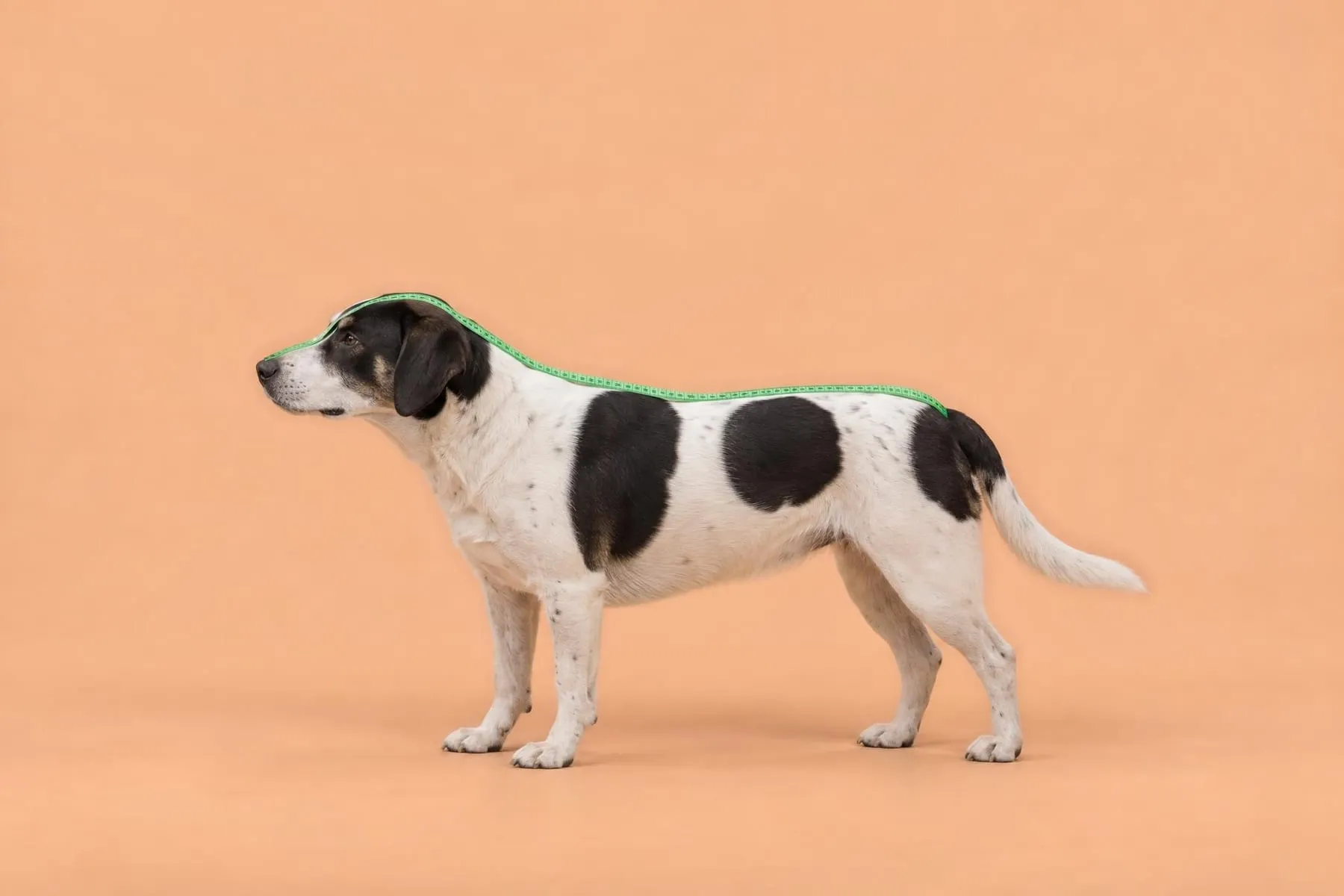
With your dog standing, measure their length from nose to tail base, leaving the tail out. Next, measure how tall they stand, up to the crown of their head, or to the ear tips if the ears point up. Add 4 inches to the length and 3 to 4 inches to the height. Then pick a crate whose inside size is at least that big.
See all 8 steps ↓Step by step
Get a tape and treats
A soft sewing tape is easiest to lay along your dog's back. A helper makes it quicker, because one of you can keep your dog's attention with a treat while the other reads the tape.
Stand your dog up
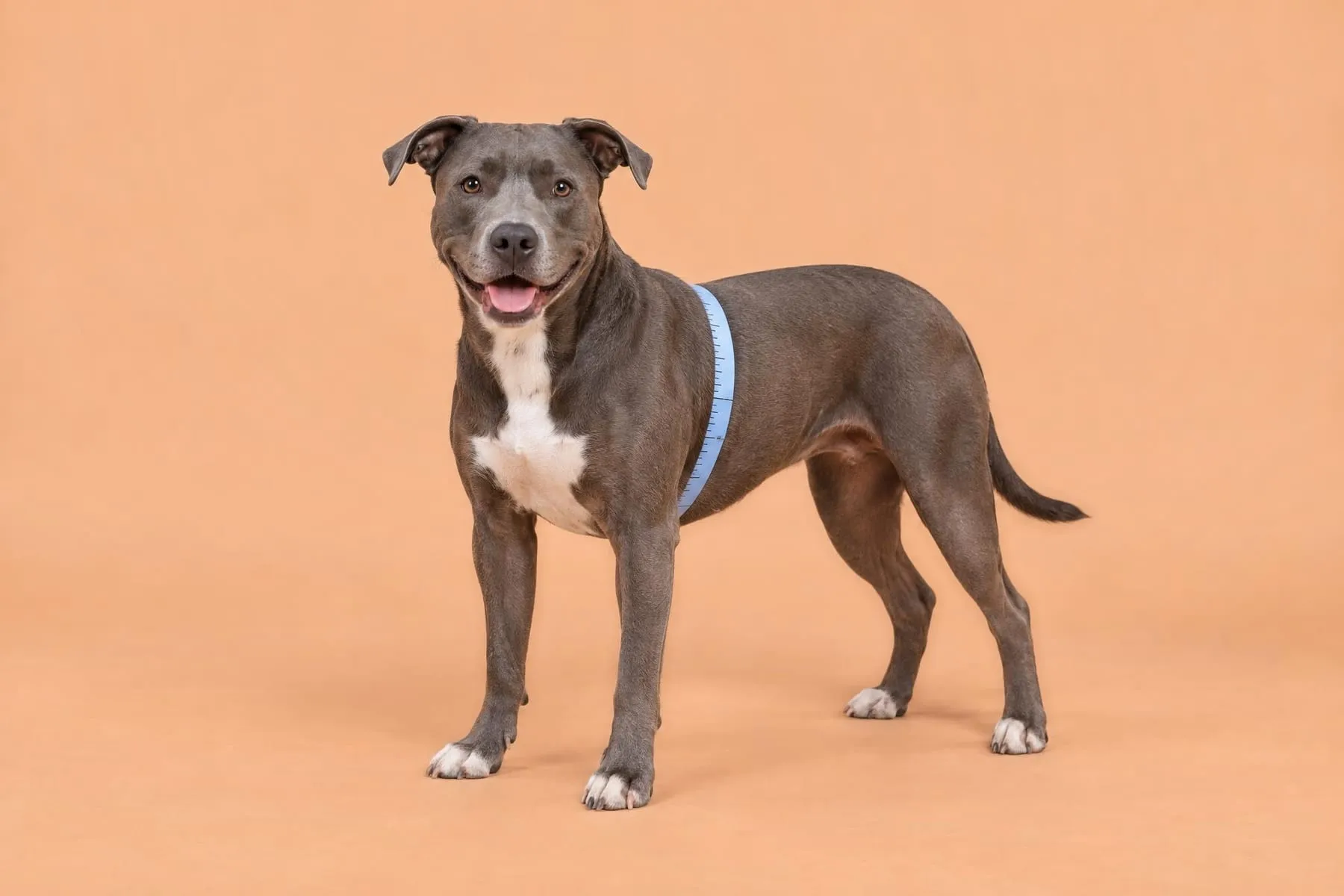
Get your dog up on four feet on a level floor before you start. A crate has to fit a dog who's on their feet, so measure them that way.
Measure the length
Run the tape along the back, from the nose to the point where the tail joins the body. Leave the tail itself out.
Measure the height
Hold the tape upright beside your dog and read it level with the crown of their head. If their ears stand up, read it level with the ear tips.
Add room to turn
Add 4 inches to the length, so your dog has room to turn and stretch out. Add 3 to 4 inches to the height, so they can stand and sit up without ducking.
Read the inside size
Compare your numbers with the inside length and height on the crate's chart. Go by those figures, not the size in the crate's name.
Check the weight too
Most crate charts also give each size a weight limit. If your dog weighs more than the limit for the size your measurements point to, go up a size.
Size for the grown dog
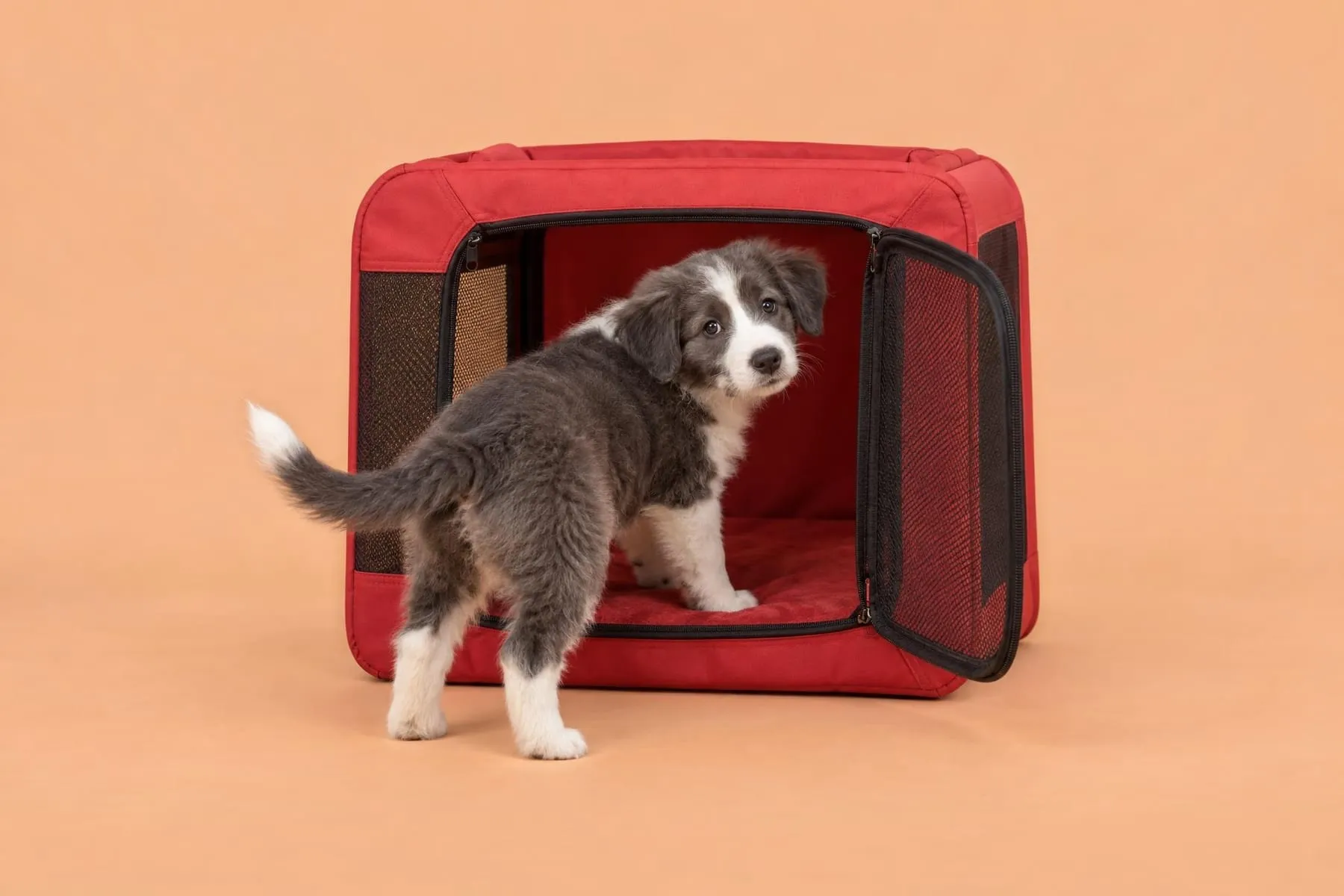
If your puppy is still growing, buy the crate for their adult size. A divider panel blocks off the spare room while they grow into it.
Where does the tape start and stop?
The length runs from the tip of the nose to where the tail joins the spine. The charts for our crate picks leave the tail out of it, and so does our Fit Finder when it checks each crate for your dog.
Not every guide measures that way. The American Kennel Club (AKC) runs the tape to the end of the tail instead. On a dog with a long tail, that gives you a much bigger number. If you’re shopping from a crate’s own chart, measure the way that chart asks, since its sizes assume that method.
The height is the distance straight up from the floor to the crown of your dog’s head. If their ears stand up, like a German Shepherd’s, go up to the ear tips.
Some dogs won’t stand still for it, so keep a treat in front of their nose to hold them on their feet. Juno, my greyhound mix, sleeps curled tight on the coldest spot in the house. If your dog is curled up or sitting when you measure, you’ll get a number far shorter than their real standing length.
How much room should you add?
Add a few inches to both numbers: 3 to 4 inches is the AKC’s range, and the charts for our plastic kennel picks ask for the same. Our Fit Finder adds 4 inches to the length, the top of that range, so the crate it suggests leaves your dog room to turn around.
More room isn’t always better, though. In a crate that’s too big, a dog may go to the bathroom at one end and settle down away from the mess (AKC). That’s a real worry while you’re house-training a puppy.
A thick bed or pad on the crate floor also takes up some of the height. If you’re adding one, take its thickness off the inside height before you check your dog’s number.
Inside size or outside size?
Look for the inside size on the crate’s chart, because that’s the space your dog has. A crate’s model size sometimes describes the outside, so it can sound roomier than it is. In our dog crate guide, one plastic kennel sold as 36-inch measures 32.5 inches inside, front to back.
The outside size still matters if you’re short on floor space. Measure the spot where the crate will sit and make sure the outside size fits it.
What size crate does a puppy need?
Buy a crate that will suit your puppy’s adult size (Humane World for Animals), and look for one that comes with a divider (AKC). That’s a panel you move back as your puppy grows, so the space stays snug now and you don’t buy a second crate later. To guess how big your puppy will get, look at the typical adult size of their breed.
How can you tell the crate fits?
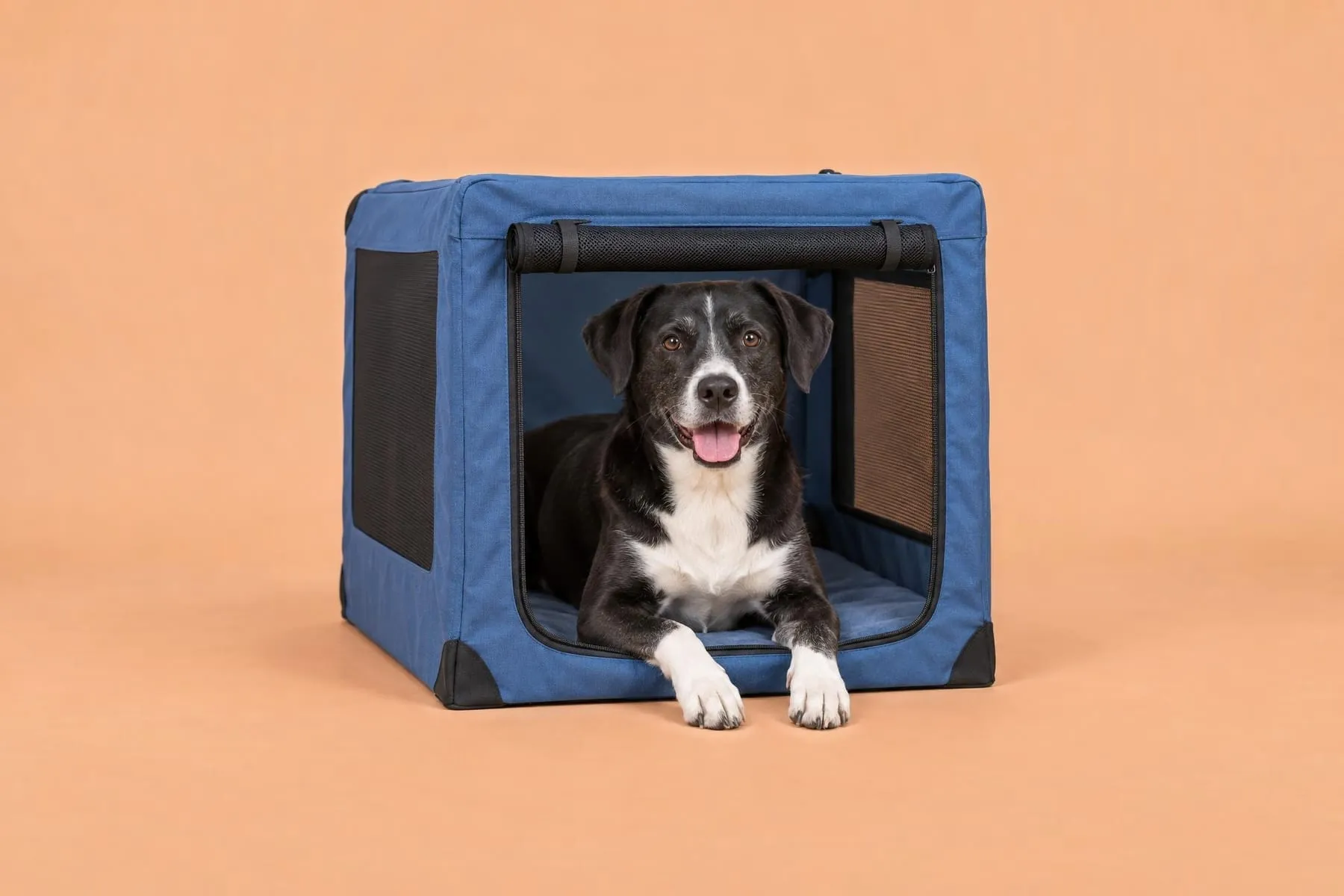
Your dog needs room in the crate to stand up and turn around (Humane World for Animals). Once the crate is set up, watch your dog in it. They need to sit up without their head or ears touching the roof, turn around without squeezing, and lie all the way down.
If any of those is a squeeze, go up a size. If your puppy has lots of space left over at one end, move the divider in until they’ve grown into it.
A crate that’s just right
Picture your dog in the finished crate: sitting up with their ears clear of the roof, turning without a squeeze, and lying flat out. Every measurement on this page is there to get you that, with no more floor than it takes. In a crate with spare floor, a dog may use one end as a bathroom.
With a puppy, you’ll keep adjusting the crate after you buy it. Each time they grow, slide the divider back a little so the space grows with them.