Care guide · Dogs · 9 steps
How to crate train a puppy
It's tempting to shut a new puppy in the crate on their very first night and hope for some sleep. To a puppy who has never seen it before, it's just a strange box, and the crying often starts as soon as the door clicks shut. A crate can become the place your puppy picks for a nap on their own. That happens when your puppy meets the crate through treats and dinners, long before the door ever closes.

Quick answer
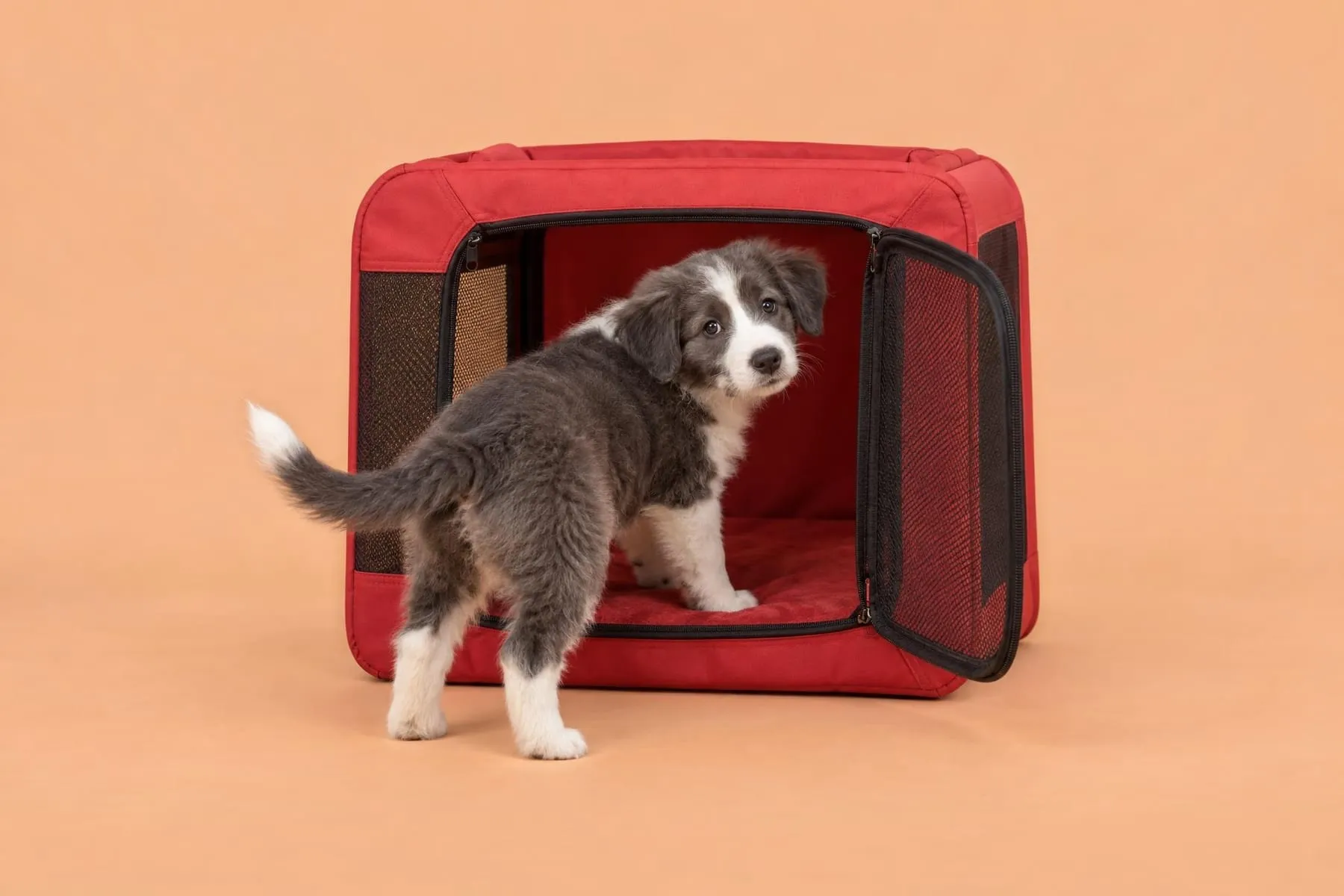
Make the crate a good place before you shut the door, with treats tossed in and meals served inside. Then build up short door-shut spells until your puppy stays calm for about half an hour, and only then use it overnight or when you go out. Until that point, a small playpen by your bed works for nights. Limit each stay to roughly one hour for each month of your puppy's age, and three or four hours at most. The crate is never a punishment.
See all 9 steps ↓Step by step
Set it up nearby
Put the crate in a room where the family spends time, and prop the door so it can't swing shut on your puppy. Add something soft, unless your puppy wets it or chews it.
Toss treats inside
Drop a treat near the door, then one just inside, then one at the back. Let your puppy walk in on their own, and never push them in.
Serve meals in the crate
Put each meal in the crate, a little further back each time, until your puppy stands all the way inside to eat.
Shut it at dinner
When your puppy eats calmly inside, shut the door during a meal and open it the moment the bowl is empty. Over the next meals, keep it shut longer, up to about 10 minutes.
Add a cue word
Pick a cue like "crate", toss a treat in and shut the door behind your puppy. Sit nearby for five to 10 minutes, then leave the room for a few minutes, door still shut.
Build to half an hour
Repeat this through the day, adding a few minutes each time, until your puppy stays quiet for about 30 minutes with you mostly out of sight. That can take days or weeks.
Leave for short trips
Crate your puppy 5 to 20 minutes before you go, with a treat and a stuffed chew toy, then leave without a fuss. When you get home, keep the hello calm too.
Plan the nights
Until your puppy can manage half an hour shut in, they sleep in a small playpen by your bed. After that, the crate goes beside your bed instead.
Keep stays short
Allow roughly one hour for each month of your puppy's age: around two hours at 8 weeks, and three or four at most. For longer days, book a dog walker or a sitter.
Why bother with a crate?
A puppy left loose in the house will chew whatever they can reach and have accidents wherever they happen to be. A crate gives them somewhere safe to be while you can’t watch them, and it helps with house-training too (Humane World for Animals). A puppy who’s had a good rest tends to chew less, too (AKC).
You can start as early as 8 weeks old. Expect the whole process to take anywhere from a few days to several weeks, depending on your puppy and how often you practice (Humane World for Animals).
What kind of crate, and how big?
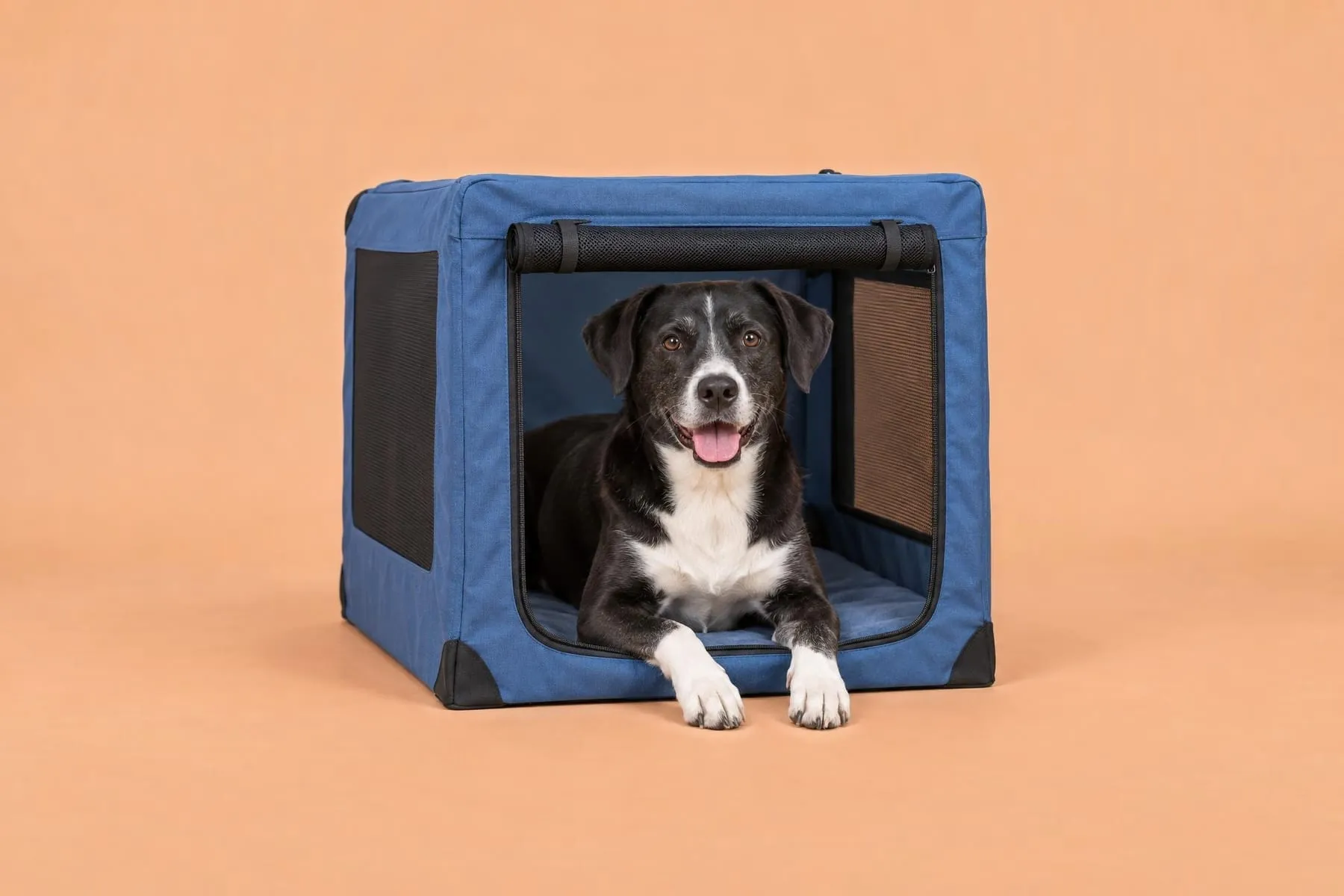
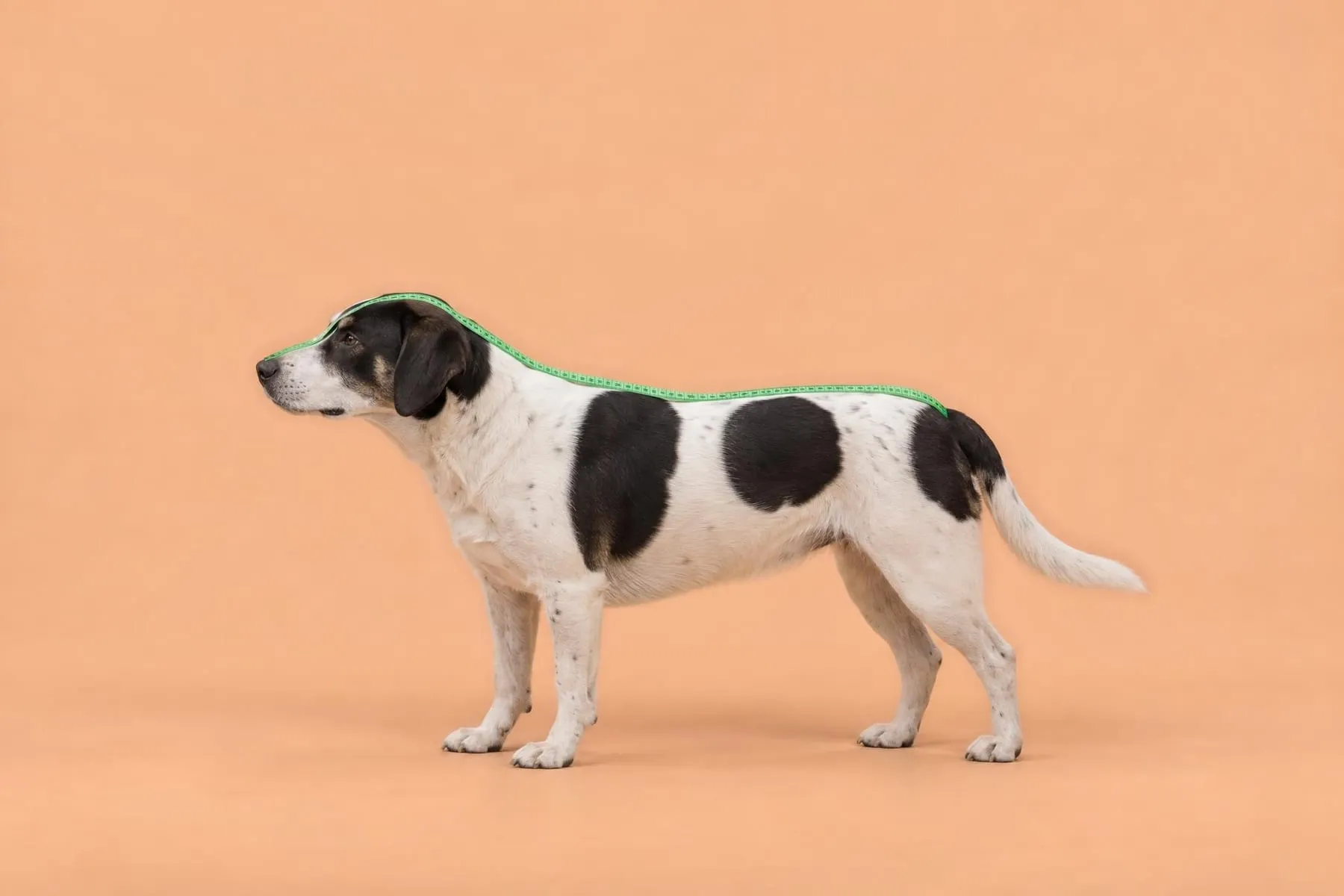
Inside, your puppy needs room to get to their feet, turn right around and lie flat, and not a lot more. In a crate with lots of spare room, a puppy can pee at the far end and sleep at the near one, which undoes the house-training. Buy for your dog’s full-grown size, with a divider panel that shuts off the extra room for now (AKC). Our guide to measuring your dog for a crate shows where the tape goes.
Some puppies like to watch everything through wire, and others settle better somewhere darker that feels like a den (AKC). Our home crate picks cover both kinds.
Setting up for a good stay
Before each stay with the door shut, take your puppy out to go to the bathroom and give them some exercise. Crate time goes best when your puppy is already calm or sleepy, so pick a moment after a walk, not halfway through a game of tug.
Give them a chew toy stuffed with food each time you shut them in. If you freeze it first, it lasts longer. Put water in the crate too, and take their collar off first, for safety (AKC).
Soft bedding needs a little care with a young puppy. Many puppies will pee on a soft, absorbent surface, and some will shred it. If yours does either, take the bedding out until your puppy stops wetting or shredding it (AKC).
Outside your practice sessions, leave the door open while you’re home, so your puppy can wander in whenever they want some quiet. Nobody should poke fingers through the bars or tap on the sides while your puppy is inside. Children need that rule most of all (Humane World for Animals).
The first nights home
A puppy who has only just met the crate isn’t ready for a whole night shut inside it. Until then, let them sleep in a small, puppy-proofed playpen beside your bed, with room to curl up and a spot to pee (AKC).
Once your puppy stays calm in the crate for about half an hour, move nights into it, beside your bed or in the hall right outside your door. Puppies often need to go out during the night, and keeping them close means you’ll hear them (Humane World for Animals). So expect to get up for bathroom trips for a while.
How long can a puppy stay in?
Young puppies need bathroom breaks often. Keep each stay to about one hour for each month of age (Texas A&M vet school), so around two hours at 8 weeks old. Even as your puppy gets older, three or four hours is the most for any puppy under 6 months (Humane World for Animals). If your days run longer than that, a dog walker or a sitter can let your puppy out for a bathroom break and some exercise.
What to do about whining
Crying within a few minutes of going in usually means your puppy is stressed and the steps went too fast. Whining after a long, quiet stretch is more likely boredom, hunger or a full bladder (AKC).
For the first kind, go back a step and keep the door-shut time shorter for a while. For the second, especially in the middle of the night, take your puppy straight outside to their usual bathroom spot. Keep it a quick, boring trip with no play, and head straight back in (Humane World for Animals). Never scold or punish your puppy for whining.
When to stop and get help
Some puppies panic in a crate. Watch for pacing, shaking, drooling, scratching or biting at the door, or long bouts of howling and barking (AKC). If you see these, stop shutting the door and go back to tossing treats in with it open.
A crate won’t fix separation anxiety. A dog who panics when left alone can hurt themselves trying to get out of a crate (Humane World for Animals). If the panic doesn’t fade as you slow down, ask your vet, or find a professional animal behavior specialist (Texas A&M vet school). A gated-off room or an exercise pen can be a safer spot for your puppy while you work on it (AKC).
Where all this is heading
Picture where this ends up. Your puppy heads into the crate on their own when visitors come over, and settles there at night with you close by. Each step above works because the crate only ever brings your puppy good things: a treat, dinner, something to chew and a nap near you.
If your puppy starts crying again at one step, go back to the step before and practice it a little longer. And as your puppy grows, move the divider back so the space stays just big enough to stand, turn and lie flat.