Care guide · Cats · 8 steps
How to measure your cat for a carrier
Your cat can grow or fill out between vet trips while the carrier sits unused. Often nobody notices until trip day, when your cat can't turn around inside. Two measurements and a quick weigh-in, done on a quiet day, tell you what size to buy next.

Quick answer
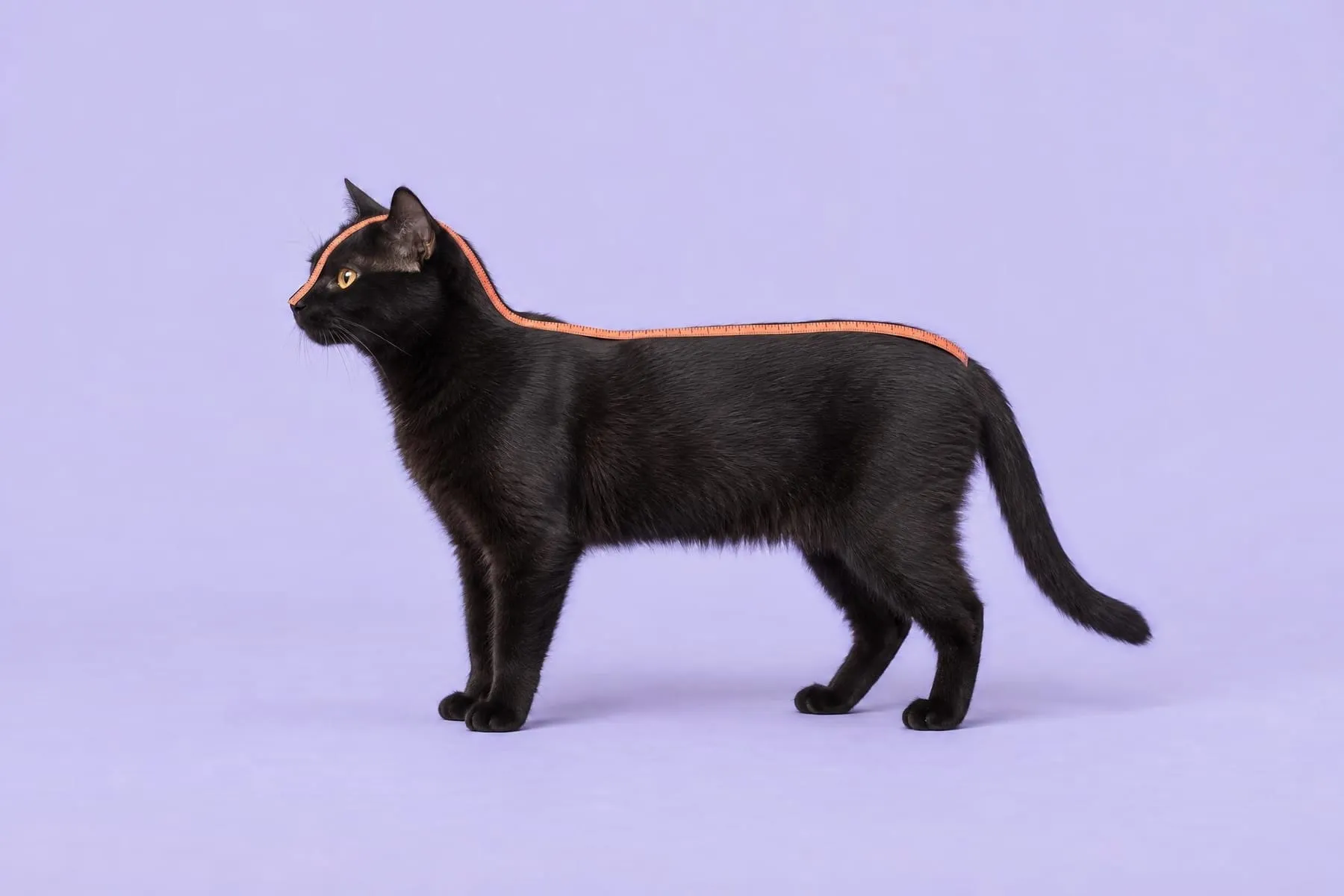
With your cat standing, measure from the nose to where the tail starts, and how tall they stand, up to the tips of their ears. Add 3 inches to each, and weigh your cat. Buy a carrier whose inside length and height are at least those numbers, and whose weight limit is at or above your cat's weight.
See all 8 steps ↓Step by step
Pick a calm moment
Measure on an ordinary day, with nothing out that hints at a trip. A soft sewing tape and a few treats are all you need.
Catch them standing
Wait until your cat is standing with their head up, such as waiting by the bowl before you set it down, or looking out a window. Curled up or stretching gives you the wrong numbers.
Tape nose to tail
Lay the tape along your cat's spine, starting at the tip of the nose. Stop where the tail joins the body, and don't count any of the tail.
Tape the height
While your cat is still standing, stand the tape on the floor next to them. The number level with the tips of their ears is the height.
Weigh your cat
Step on a bathroom scale while you hold your cat, then step on again by yourself. Take the second reading from the first, and what's left is your cat's weight.
Allow turning room
Add 3 inches to the length, which gives your cat space to turn inside. Add 3 inches to the height too, so they can stand up without ducking.
Find the inside figures
Compare your two numbers with the space inside the carrier, as its chart gives it. If the chart doesn't say inside or outside, treat its sizes as the outside, so the space inside is smaller.
Check the weights
The lower number in a weight range isn't a minimum. Only the top number matters: if your cat weighs more than that, go up a size.
Where do you put the tape?
Start the tape at the tip of your cat’s nose and run it along the spine, stopping where the tail joins the body. Two of the carrier charts for our picks measure length the same way, and our Fit Finder asks for that number too.
For the height, keep your cat standing and read the tape level with the tips of the ears, since they’re what touch the roof first. A good carrier lets your cat stand, turn around, sit and lie down comfortably (AAHA), so the roof has to clear those ear tips.
Pick your moment, too. Fig, my gray tabby, vanishes under the bed when anything that looks like a trip comes out. So leave the travel gear where it is, and catch your cat standing with their head up, like when they’re waiting for you to put the bowl down.
How much bigger than your cat?
Those same two charts ask for a carrier 3 to 4 inches longer and taller than your pet. For a cat, the low end of that is the better bet. Cats like to sit in a small space, and a bigger carrier doesn’t always make a cat feel safer (International Cat Care).
Our Fit Finder adds the 3 inches to the length for you, so check the height against the chart yourself.
Why does the inside size matter?
The size in a carrier’s name can be the outside measurement, and the walls take up some of that. In our guide to carriers for big cats, the plastic kennel sold as the 24-inch size has 21.5 inches of floor from the door to the back wall. Take off the 3 inches for turning, and a cat of 18.5 inches or less still has room.
Some soft bags print only one set of sizes, with no word on whether they’re inside or outside. When a chart leaves that out, our Fit Finder treats the size as the outside. It takes 2 inches off the length for the frame and the fabric sides, on top of the 3 inches for turning.
If the trip ends on a plane, ask your airline which carriers it accepts before you buy one (International Cat Care).
Does the carrier fit?
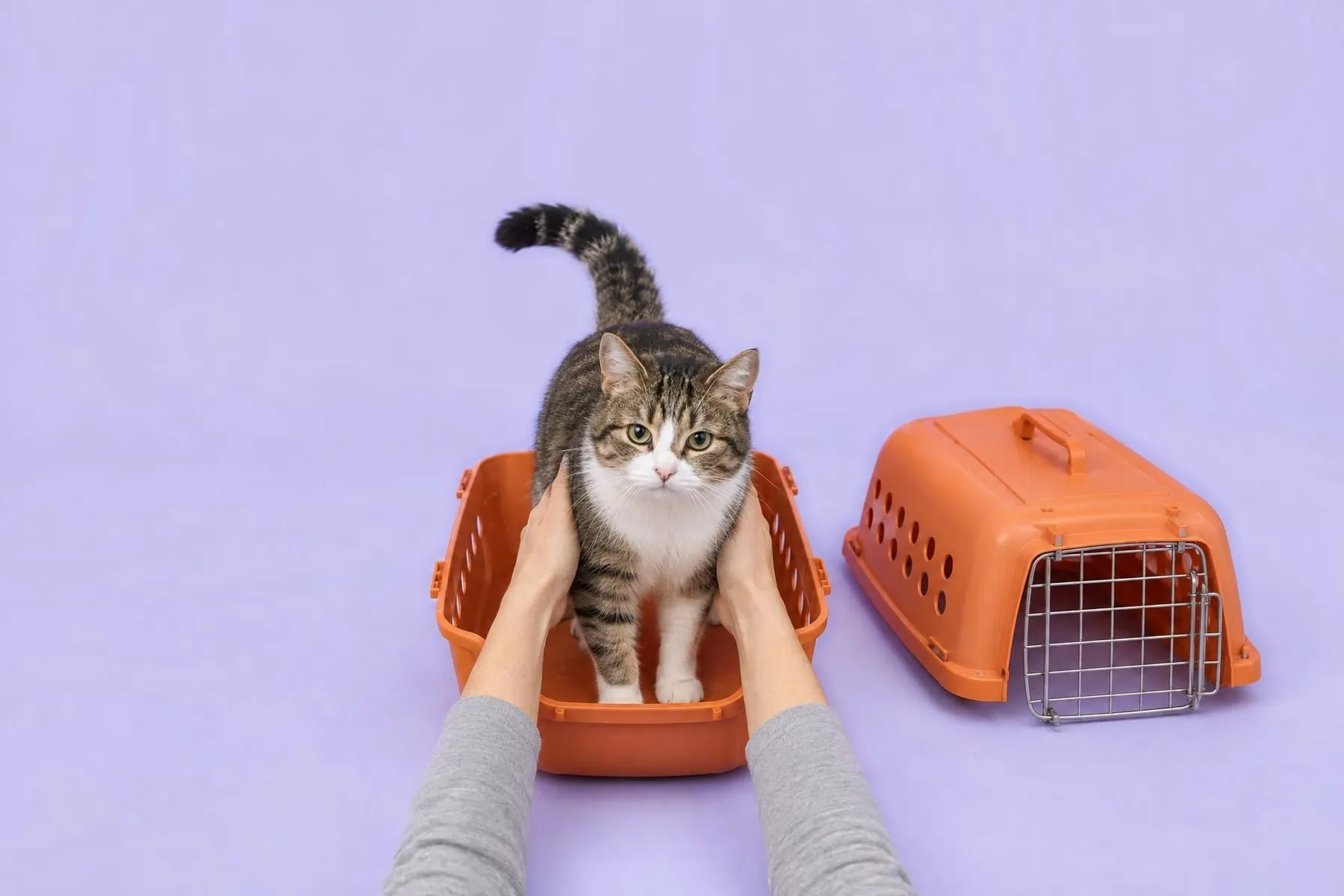
Once the carrier is home, leave it in a room your cat uses, with its door propped open, until your cat wanders in. Then check that they can stand up with their ears clear of the roof, turn all the way around, and stretch out flat on the floor.
If your cat has to curl up or duck, go up a size. Remember to add the carrier’s own weight to your cat’s, because that total is what you’ll be lifting in and out of the car.
Room to turn, and not much more
A cat doesn’t need a big carrier for a car ride. They need enough room to get up, turn and settle, and walls close enough to feel snug the rest of the way. That’s why we add nearer 3 inches than 4. It’s also why the height is taken with your cat standing, right to the ear tips.
If a plane is part of the trip, the airline’s rules come before anything on this page. Ask the airline which carriers it accepts before you buy, then check your cat’s measurements against that carrier.