Care guide · Cats · 9 steps
How to get a reluctant cat into a carrier
If your cat hides the moment the carrier comes out, today's job starts before they see it. A small room with the door shut leaves them nowhere to run and you nothing to chase. Back home, a few days or weeks of carrier training make the next trip easier.

Quick answer
Set the carrier up in a small room with few places to hide, bring your cat in, close the door, and don't chase them. If they won't walk in for a treat and the trip can't wait, lower them in through the top or back them in through the door. Wrap them in a thick towel if they struggle. Once you're home, keep the carrier out in a room your cat spends time in, so it stops meaning the vet.
See all 9 steps ↓Step by step
Get the carrier ready
Put in a towel or blanket your cat has slept on. If the top comes off, take it off now, and set it aside where you can reach it.
Pick a small room
Choose a room with few hiding places, such as a bathroom, and put the carrier in it. If you can, set it up while your cat is in another room.
Bring your cat in
Carry your cat into the room and close the door behind you. Move slowly and talk quietly, and never chase your cat around the room.
Offer a treat first
Toss a treat or a favorite toy into the carrier, then sit back. Give your cat a few minutes to walk in on their own.
Lower them in
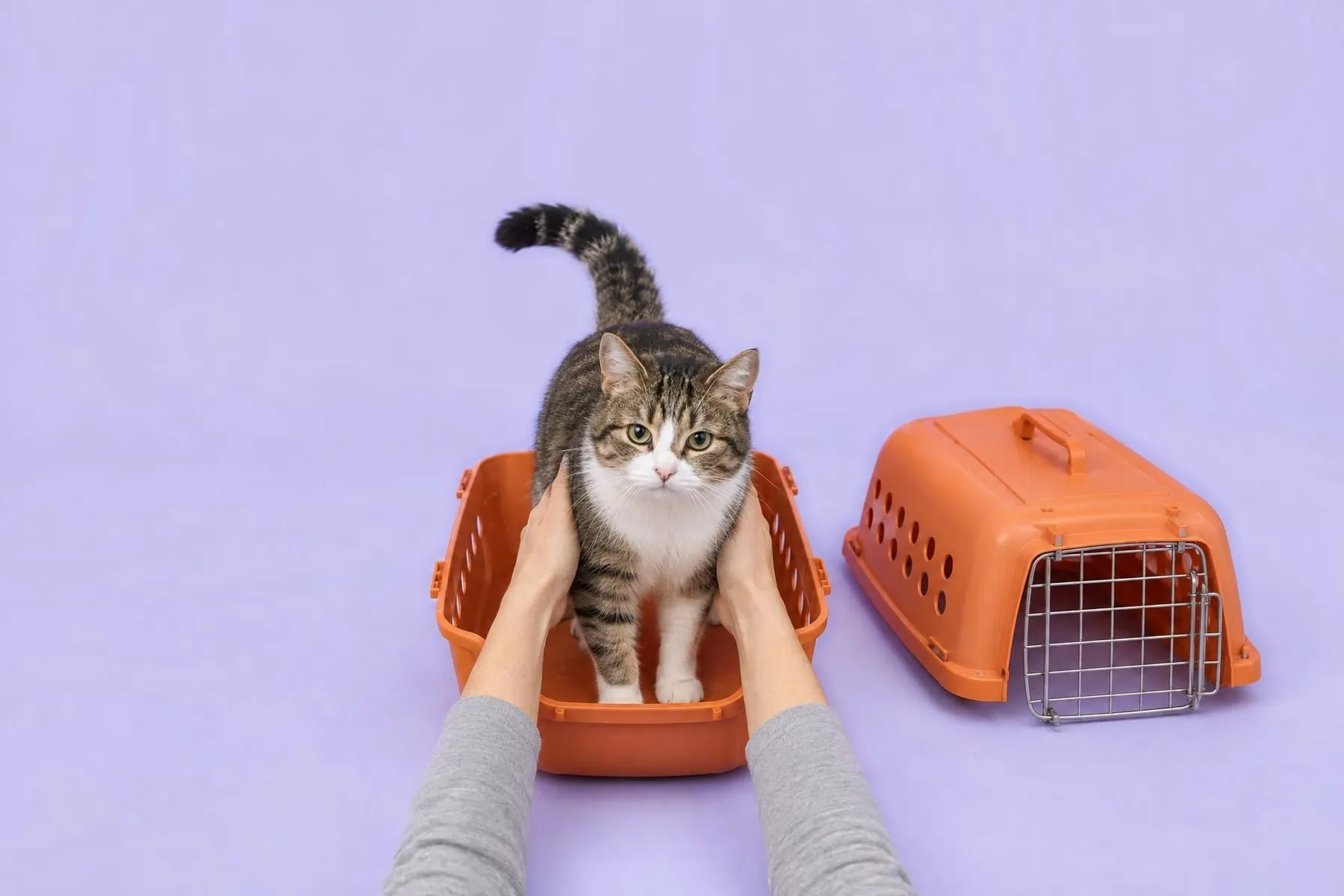
If your cat won't walk in and the trip can't wait, lower them gently in through the top. If the top comes off, set them in the bottom half and put it back on.
Guide them in backwards
If the only door is at the front, set the carrier against a wall so it can't slide. Guide your cat in backwards, rear end first, then close the door.
Use a towel if needed
When the trip can't wait and your cat twists and grabs the edges, wrap them in a thick towel that smells of home. Put your cat and the towel in together, quickly but gently.
Carry it level
Hold the carrier against your body with both arms underneath, not by the handle, and drape a towel over it, leaving gaps for air. In the car, seat-belt it or wedge it in a footwell.
Start training tonight
When you're home, leave the carrier open in a room your cat likes. Over the next days and weeks, toss treats near it, then just inside, then further in.
Why does your cat hide when the carrier comes out?
If the carrier only comes out on vet day, your cat has learned what it means. To a cat, it stands for being shut in and losing control, and the sight of it alone is often enough to scare them (AAHA). Fig, my rescue tabby, is the same: give him any hint of a trip and he’s under the bed.
Sometimes the fight is about more than fear. A cat who fights the carrier may be in pain, and nearly all cats over 12 years old have arthritis (AAHA). If yours has started fighting harder than usual, mention it when you book.
What if your cat won’t walk in?
Start in a small room with few places to hide, move slowly, and never chase your cat toward the carrier (AAFP). Put treats or a toy inside first, so your cat gets the chance to walk in on their own.
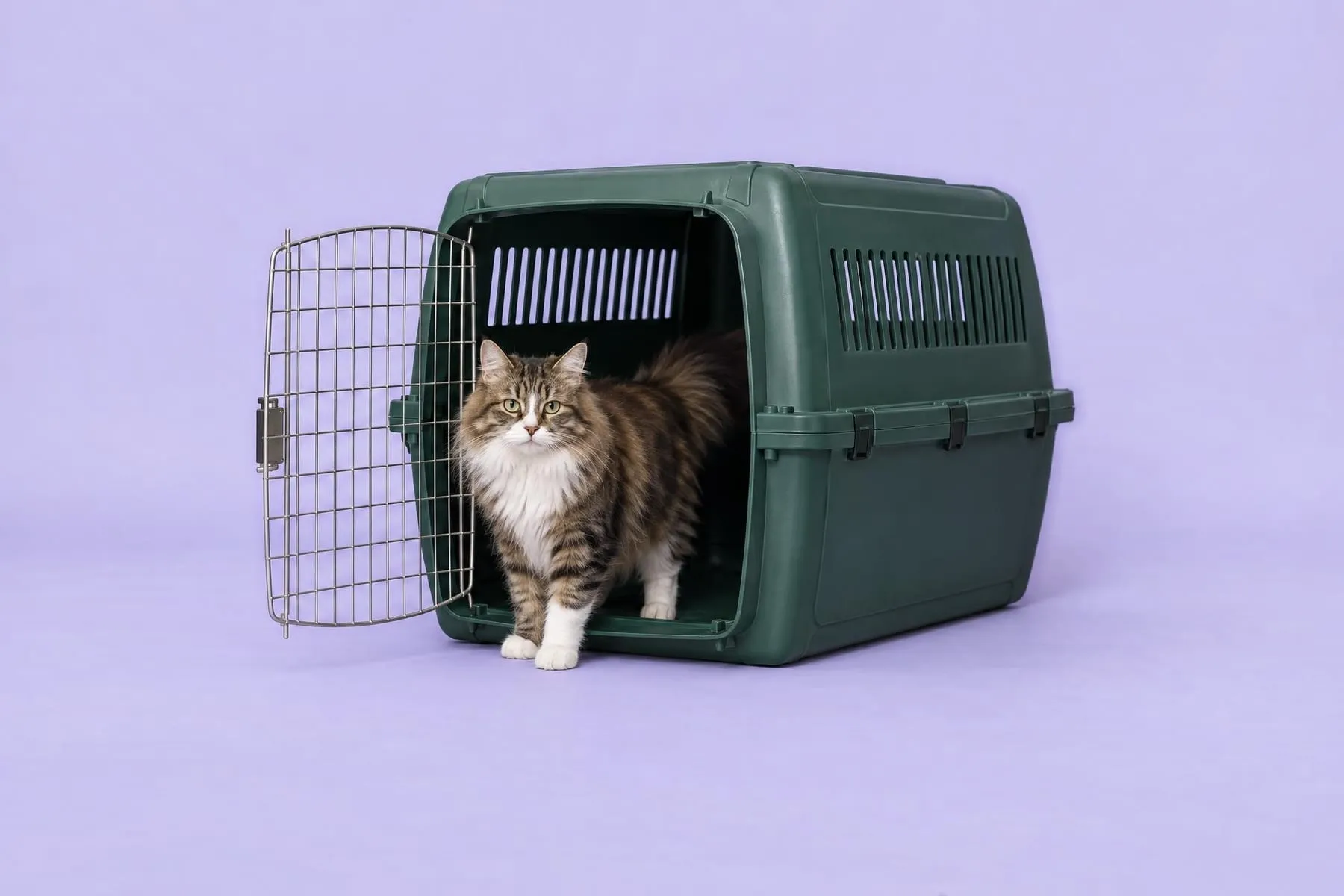
When that doesn’t work, the carrier’s shape decides your next move. With one that opens on top, cradle your cat and lower them in. With a hard carrier whose top half comes off, set your cat in the bottom half and calmly put the top back on (AAFP).
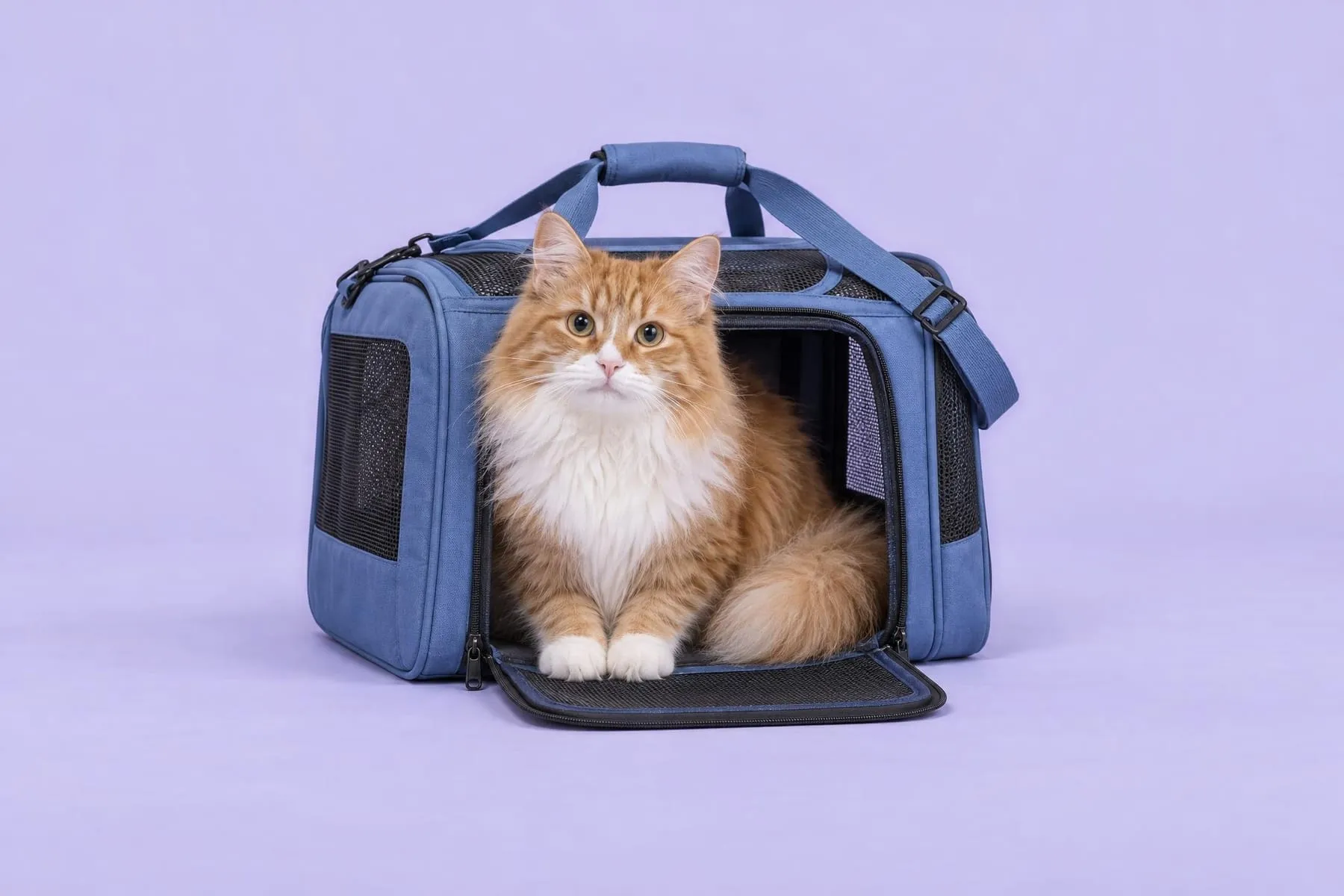
A carrier that only opens at the front leaves you one way in. Set it against a wall so it can’t slide, then guide your cat in backwards, rear end first (PDSA). If your cat spreads their legs wide at that door every time, a carrier that opens on top is worth the change. Our guide to carriers for big cats has one, a soft bag that unzips on top and along three sides.
When should you use a towel?
The towel is for the cat who panics as soon as the carrier comes out. Keep the carrier close but out of sight. Wrap your cat in a thick towel that smells of home, and put cat and towel in together (International Cat Care). A carrier with a top opening makes this much easier.
Save the towel wrap, and every way of putting a cat in by hand, for days when the trip can’t wait. Forcing a cat into a carrier even once can undo weeks or months of careful training, AAHA warns. If your cat is terrified at every visit, ask your vet about calming medicine for the next trip.
How do you make the next trip easier?
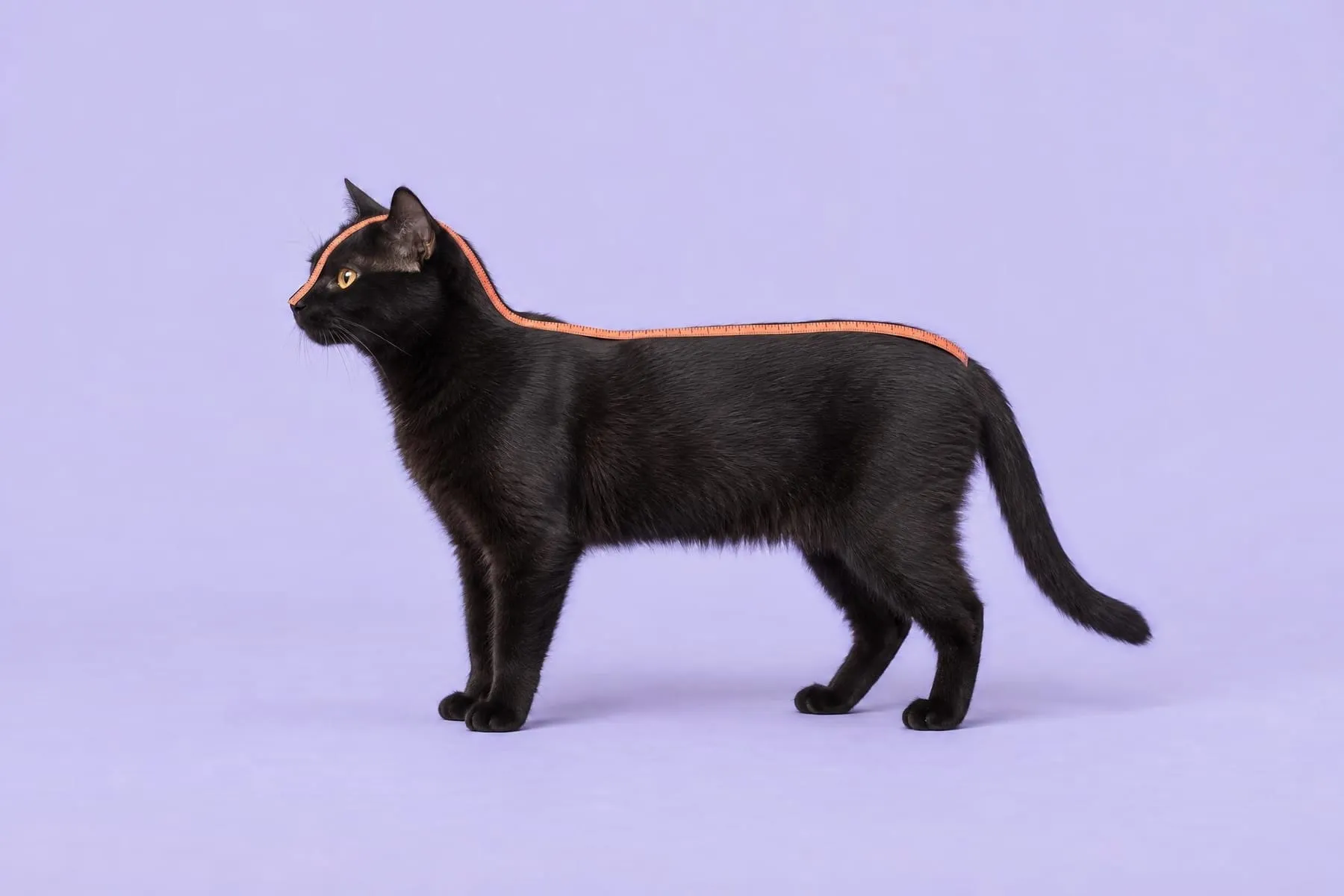
The long fix is to make the carrier part of the furniture. Keep it in a room your cat already likes, with soft bedding inside, so it turns into a place to nap. If you’re shopping for a new one, our guide to measuring your cat for a carrier shows where the tape goes. The Fit Finder then checks your numbers against each carrier’s size chart.
With a cat who already fears the carrier, don’t start with treats inside it. Toss them near it first, then just inside the door, then further back, and let your cat set the pace. Keep their regular meals out of it too, so their food doesn’t pick up the same bad feeling.
Expect it to take days or weeks before your cat trusts the carrier (AAFP). Age is no excuse to skip it, either. Older cats can still learn (AAHA), so it’s not too late for a ten-year-old who has hated the thing all their life.
From hiding spot to nap spot
Trip day goes best when nothing about it is a chase. Start in a small room, move slowly, and give your cat the chance to walk in on their own. If they won’t, lift them in gently through a top opening, or guide them in backwards if the carrier only opens at the front. If your cat panics, wrap them in a thick towel and put cat and towel into the carrier together.
The real win comes later, though. A carrier that lives in the house with a soft bed in it slowly stops meaning the vet. One day your cat may be napping in it before you’ve even reached for it. If the fighting ever gets worse, mention it to your vet, because pain can be part of it.