Care guide · Dogs · 9 steps
How to fit a dog harness
Before the first walk in a new harness, each strap needs setting to your dog's shape. With your dog standing in front of you it takes a few minutes, and a well-set harness is far less likely to slip off or rub.

Quick answer
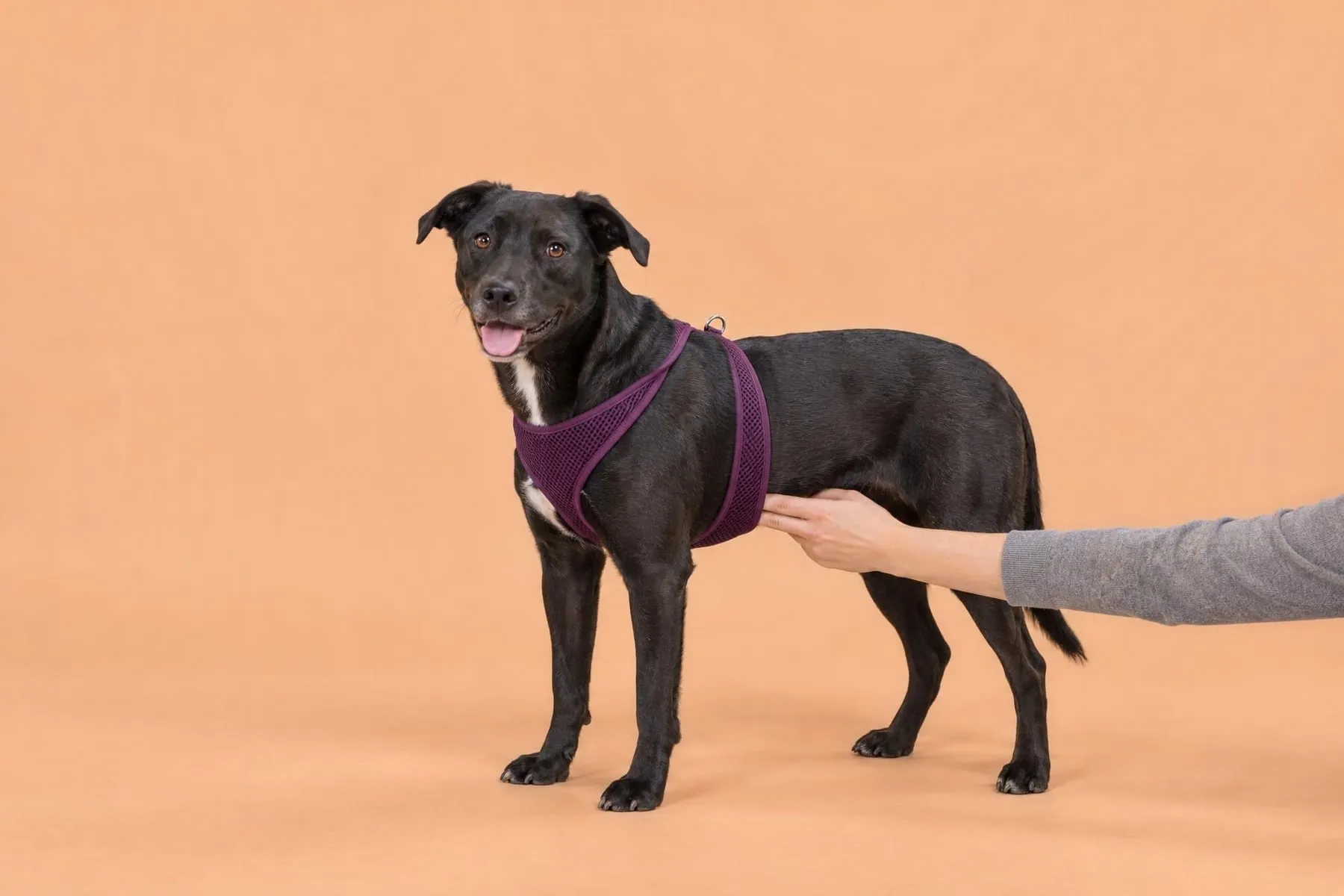
Put the harness on loose, then tighten each strap until two fingers fit under it. On a medium-sized dog, keep the strap around the ribs about a hand's width behind the armpits. After each of the first few walks, look under every strap, and call your vet if you find red skin, scabs or thinning fur.
See all 9 steps ↓Step by step
Loosen every strap
Let each strap out most of the way before the harness goes on. A loose harness is much easier to get on, and you tighten it once it's on.
Put it on
Put the harness over your dog's head, or buckle the neck loop on if it has a buckle. Lift one front leg through, and check the leash ring sits where the instructions show.
Tighten bit by bit
Take up each strap a bit, then move to the next one and go around again. Keep the buckles and rings centered on your dog as you work.
Do the two-finger check
Slide two flat fingers under each strap in turn. If they won't go in, let the strap out a little, and if a third finger slips in easily, take it up.
Clear the armpits
Find the strap that goes around the ribs. On a medium-sized dog, there should be about a hand's width between it and the armpits, which helps prevent sores there.
Try to back out
Face your dog with the leash short and take one slow step back, so the leash pulls gently toward you as they lean away. If the harness slides toward the ears, tighten it.
Watch the front legs
Walk your dog around the yard and watch from the side. Both front legs should swing through a full stride, with no strap pressing on the shoulders.
Look under the straps
After each of the first few walks, part the fur under every strap. If you find redness, scabs, bumps or a thin patch, put the harness away and phone your vet.
Refit after changes
Refit the harness after a groomer's visit, or if your dog gains or loses weight. A long, fluffy coat may need the straps a bit tighter to keep the harness on.
How tight should the straps be?
Two flat fingers should slide under every strap (AKC). That gap is what lets your dog move freely (Four Paws). A strap you can’t get your fingers under is too tight, even on a dog who isn’t fussing.
Some vets like it a little firmer. Amy Attas, a vet quoted in the AKC’s guide to choosing a harness, says you should have to squeeze the two fingers in. It should never be so tight that your dog is uncomfortable. A long or fluffy coat can need the straps a bit tighter too, or your dog may slip out. For a dog who keeps backing out of the harness, start by trying that firmer fit.
Where should each strap sit?
Start with the strap that goes around your dog’s ribs, behind the front legs. On a medium-sized dog, leave about a hand’s width between that strap and the armpit, which helps prevent sores there (Four Paws).
Then watch the shoulders. The harness shouldn’t get in the way of the shoulder blade as your dog walks, and a Y- or H-shaped harness leaves that space clear. Anywhere a ring or clip touches the skin, it’s better padded (Four Paws).
How do you check the harness won’t come off?
Juno, my greyhound mix, will back straight out of a harness with slack in it if she wants to. This check finds the gap before your dog does. Once the straps feel right, tug the harness gently forward, back and to each side. Then stand in front of your dog and take one slow step back, so the short leash pulls gently toward you while your dog leans away. That’s how a dog backs out of a harness, and if it has room to slide over the head, your dog can slip out of it (AKC). Tighten the straps until it can’t slide over their head.
If every strap is as tight as it goes and the harness still slides off, it’s probably the wrong size. Run through how to measure your dog for a harness, then put your dog’s chest measurement into the Fit Finder to see which size to order.
A slim dog such as a whippet or greyhound can back out even when the size is right. Our escape-proof harness picks start with one that has a strap around the belly as well as the chest.
What does rubbing look like?
Check behind the front legs, across the chest and anywhere a buckle or ring touches the skin. Mesh harnesses have less padding than padded ones, so they’re more likely to rub (AKC).
If you find red skin, bumps, a rash or scabs under a strap, stop using the harness and phone your vet. Do the same if you see an open sore, a bald spot or fur that has thinned. Each of these is a reason to have your vet check the skin (ASPCA).
Snug, free and comfortable
A good fit comes down to three things working together. The harness hugs your dog closely enough to stop a back-out, yet leaves room for two fingers under every strap. And it sits so nothing rubs at the armpits or gets in the way of the shoulders. When it’s right, your dog walks with a full, easy stride and forgets the harness is there.
Coats grow out, groomers trim them back, and dogs gain and lose weight. Any of those can change the fit, so whenever your dog’s shape changes, run the two-finger check and the back-up test again before the next walk.